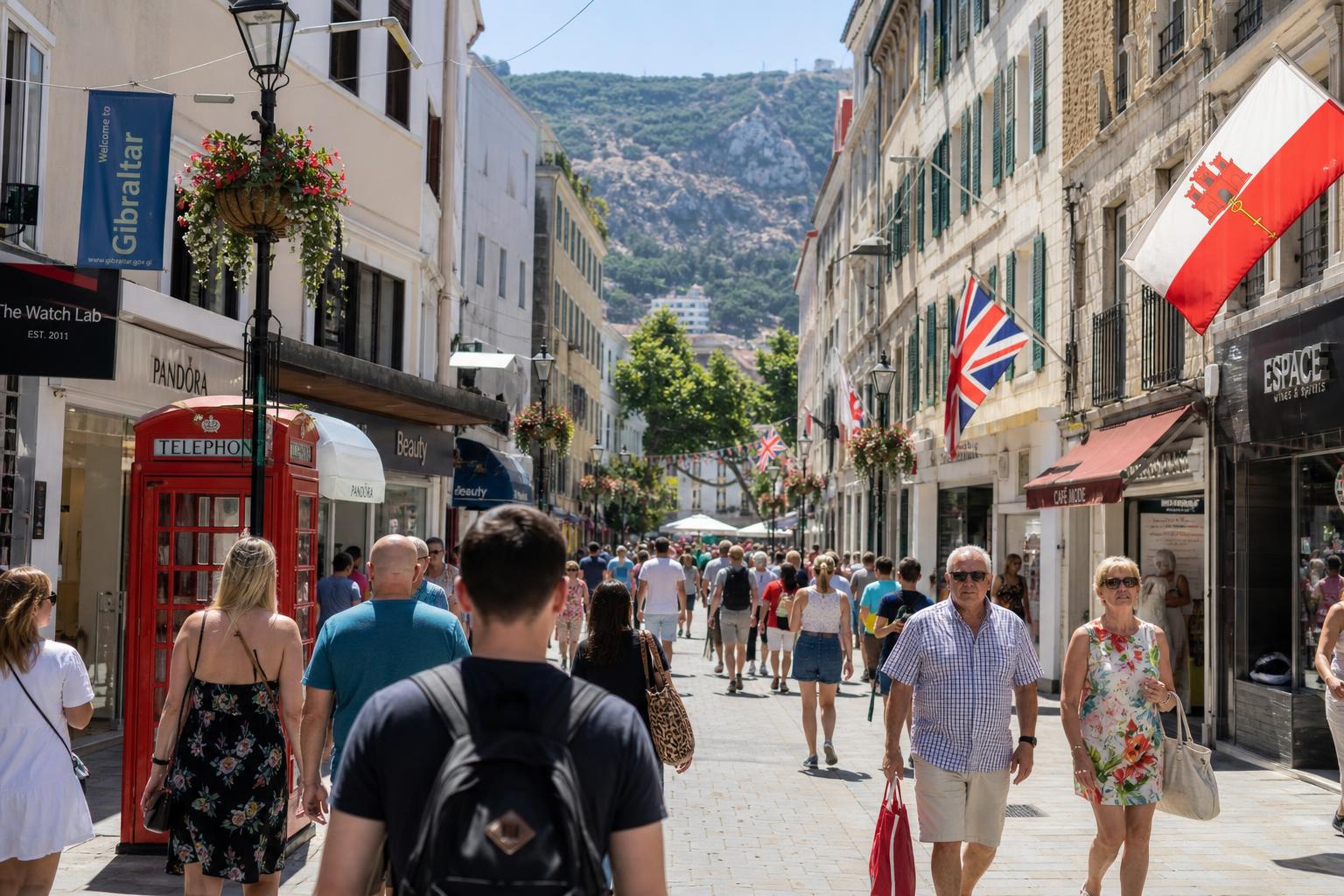
جبل طارق البريطاني
From 1704 to a Mediterranean identity
أصبح جبل طارق بريطانيًا عام 1713 بموجب معاهدة أوترخت.
ظل قرنين قاعدة بحرية تتحكم في الوصول إلى البحر المتوسط.
تمزج هويته المؤسسات البريطانية بالثقافة المتوسطية ولغة محلية تُدعى اللانيتو.
British Gibraltar begins with the Anglo-Dutch capture of the Rock in 1704, formalised by the Treaty of Utrecht in 1713. For the next two centuries, Gibraltar's role was clear: a naval base that guarded the entrance to the Mediterranean and served every fleet that mattered to the Empire. But daily life on the Rock never became purely British. Genoese, Maltese, Sephardic Jews, Portuguese and Andalusians settled around Main Street, and their descendants shaped Llanito, the local mix of English and Spanish you can still hear today.
- Explains why Gibraltar feels British and Mediterranean at the same time.
- Frames the entire modern history of the Strait.
- Shows how a small territory can shape naval power across continents.
- Main Street with its British shopfronts and Genoese-style balconies.
- The Trafalgar Cemetery, tied to the 1805 battle in the nearby Cape.
- The Cathedral of Saint Mary the Crowned and the Convent, seat of the Governor.
Reading Gibraltar only through red phone boxes and pubs. The Mediterranean layer — food, surnames, the sound of Llanito — is just as central.
Walk Main Street once in the morning for shops and once at dusk for the light on the balconies — you'll see two different cities in the same street.
أسئلة شائعة
When did Gibraltar become British?
Captured by an Anglo-Dutch fleet in 1704 and formally ceded to Britain by the Treaty of Utrecht in 1713.
What is Llanito?
The local vernacular of Gibraltar, mixing English, Andalusian Spanish and words from Genoese, Maltese and Hebrew origins.
Why is Trafalgar Cemetery important?
It holds the graves of sailors linked to the 1805 Battle of Trafalgar, fought off the nearby Spanish coast.
Is Gibraltar independent from the UK?
No — it is a self-governing British Overseas Territory with its own parliament and government, while defence and foreign affairs remain UK responsibilities.